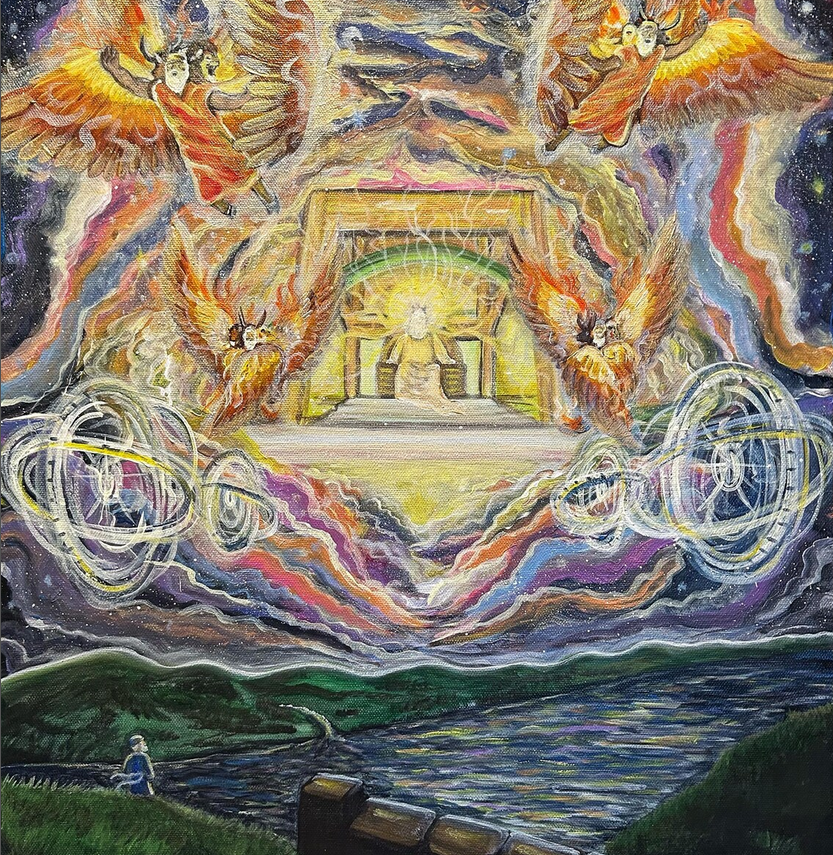
Ezekiel speaks to a people already in exile, already defeated, already stripped of comforting narratives. His prophecy does not console; it clarifies. He does not promise safety; he demands responsibility. He tells the exiles that the Temple will fall not because God has abandoned them, but because their spiritual self-deception has made collapse inevitable.
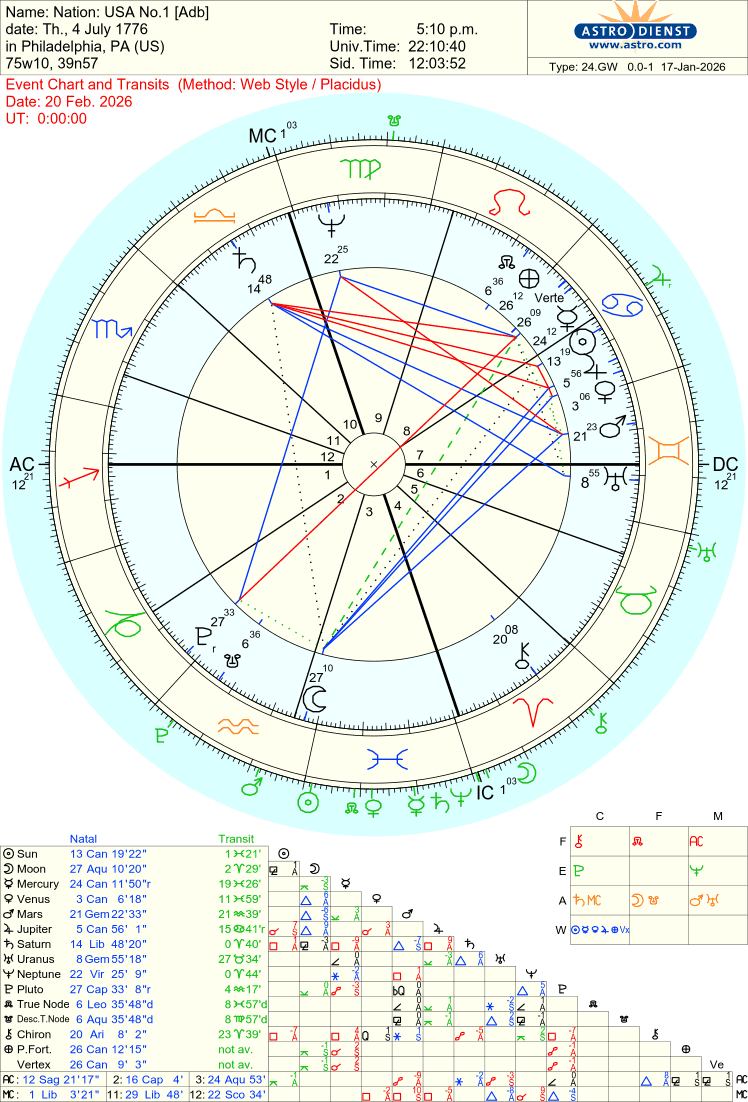
The Saturn–Neptune conjunction operates in exactly this register. Neptune dissolves the old dream. Saturn enforces the law that replaces it. At the very first degree of Aries — the seed point of existence — Israel is confronted not with enemies, but with the unbearable question of what kind of nation it actually is once history stops granting moral exemptions.
This conjunction does not bring sudden catastrophe. It brings fatigue. It brings the slow realization that the narratives which once sustained identity no longer generate coherence.
For decades, Israel has lived in a state of emergency consciousness — improvising legitimacy, survival, and moral clarity under relentless pressure. That model now exhausts itself. Saturn in Aries demands structure, accountability, and consequence. Neptune in Aries dissolves inherited myths, ideological comfort, and the fantasy that clarity will arrive from the outside. Together they force Israel into what Ezekiel demanded of the exiles: adulthood without illusions.
Ezekiel’s most radical teaching is not about destruction, but about responsibility. “The soul that sins, it shall die.” Collective identity no longer inherits moral credit from ancestors. Each generation stands alone before history. This is precisely what unfolds under the ongoing opposition of Pluto in Aquarius to Israel’s natal Moon in Leo. The emotional self-image of the nation — its heroic mythology, its trauma-based identity, its inherited moral narrative — is subjected to relentless psychological pressure. Pluto does not attack Israel’s power; it attacks Israel’s self-concept. The question is no longer whether Israel has the right to exist. The question becomes whether Israel knows who it is without the story it has told itself for seventy-five years.
2027 marks the emotional climax of this process. Pluto’s exact opposition to the Moon corresponds to what in Ezekiel would be called the breaking of the heart of stone. National identity becomes unbearable to inhabit in its old form. Pride no longer comforts. Victimhood no longer organizes meaning. Even righteousness feels insufficient. The collective psyche enters a period of grief that cannot be resolved by rhetoric or victory. This is not a crisis of legitimacy; it is a crisis of self-recognition. Israel is forced to see itself without mythic mirrors.
Ezekiel’s most famous vision — the Valley of Dry Bones — is often misread as a fantasy of miraculous restoration. In fact, it is a vision of post-illusion life. The bones do not come back to the old world. They reassemble into something new, animated not by nostalgia but by breath — by spirit that enters after meaning has already collapsed. That is the deeper promise embedded in the Ezekiel Conjunction. Saturn builds the new skeleton. Pluto strips the old emotional flesh. Neptune supplies the breath — but only after the fantasy body has disintegrated.
By 2028, Israel does not emerge redeemed. It emerges reconfigured. Identity becomes quieter, heavier, less performative. The nation no longer depends on historical trauma to justify its existence. It no longer expects the world to understand it. It no longer seeks moral exemption. It inhabits a colder, more inward legitimacy: the legitimacy of a people who know that existence itself is the responsibility.
This is why Ezekiel is the correct prophetic lens. He is the prophet who speaks after collapse, not before redemption. He does not promise safety; he demands coherence. He does not offer reassurance; he offers structure. He tells the exiles that God has not abandoned them — God has simply withdrawn illusion.
The Saturn–Neptune conjunction at 0° Aries is exactly that withdrawal.
Not punishment. Not prophecy of doom.But the end of symbolic shelter.
What Israel is being asked to become after 2026 is not more righteous, more innocent, or more admired. It is being asked to become real — a nation whose identity is no longer sustained by myth, trauma, or emergency, but by law, responsibility, and spiritual adulthood.
Ezekiel’s message to the exiles was never “You will be saved.”
It was: “You will know that I am the Lord.”
And that knowledge, in biblical language, is not comfort.
It is the sobering clarity of existence without illusion.